Tecno - The Best Concept Phone of 2026?
The short version
Google killed the modular phone in 2016 and nobody managed to revive it. Tecno just built the thing everyone wanted, 4.9mm thick, and I still would not carry it.
In 2016, Google was going to let you build your own phone.
Project Ara was a frame you slid parts into. Care about photos? Buy the better camera and skip everything else. Never make it past lunch on a full charge? Slot in a bigger battery. Do not game, so the chipset is irrelevant to you? Do not pay for one. It was the first time a phone company suggested the spec sheet was a menu instead of a bill, and for a while it looked like the most interesting thing happening in phones.
I was fifteen. I watched those demo videos more times than I would like to admit.
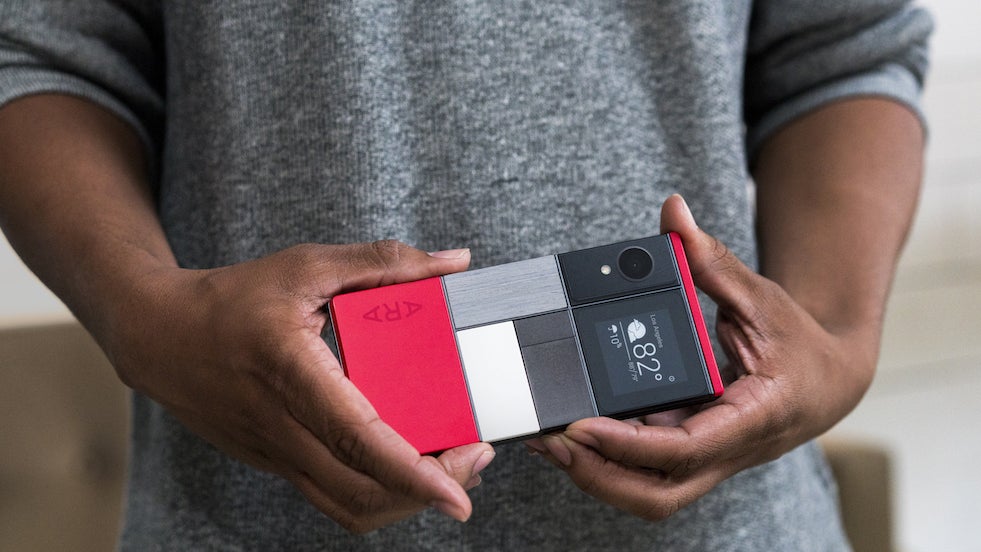
Then Google shelved it. No real explanation, just a quiet suspension and a statement about streamlining hardware efforts. Everyone who tried afterwards ran into the same wall. LG’s G5 modules were a joke by the second one. Motorola’s Moto Mods got a couple of years of polite reviews and then stopped. The idea did not fail because people hated it. It failed because nobody could make the parts thin enough to be worth the compromise of carrying them.
Tecno built the thing Google gave up on
At MWC 2026, Tecno showed a modular phone with a base that is 4.99mm thick. That is thinner than the iPhone Air, which was already thin enough that people were making jokes about snapping it. The back is a magnetic array split into eight zones with pogo pins, so a module lands where it should and just works. Tecno calls it Modular Magnetic Interconnection Technology, which is a lot of syllables for magnets that line up properly.
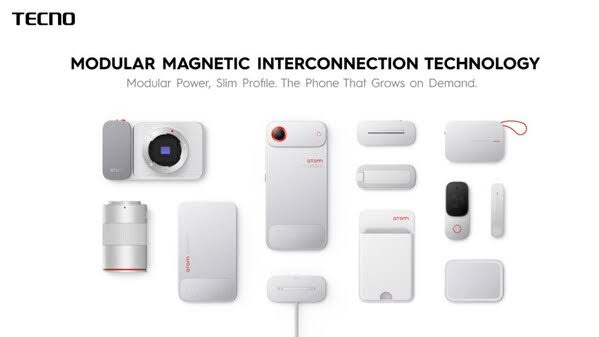
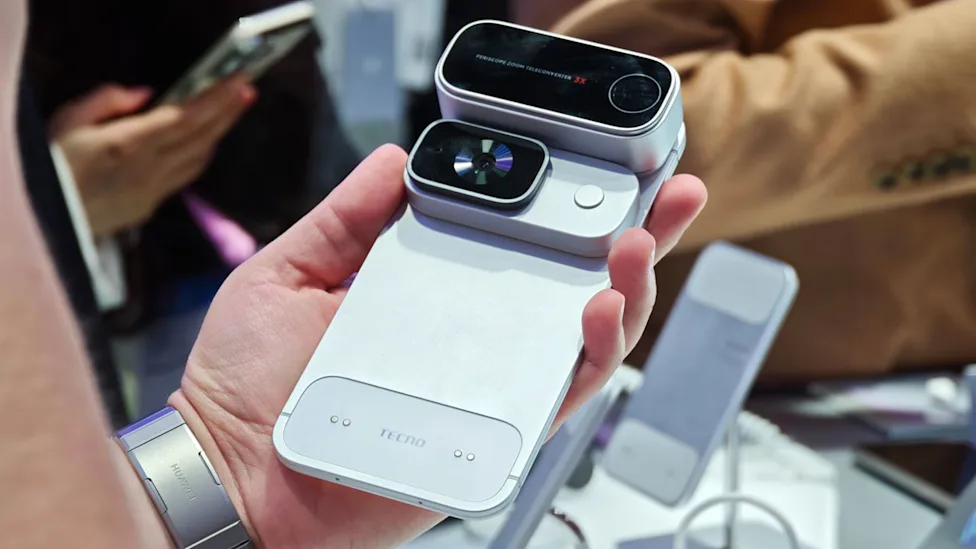
The accessory list is the part that made me sit up. A 4.5mm battery bank. A 3x telephoto that runs as its own optical system and streams a live preview to the screen. A speaker. A wallet. An actual mirrorless camera module with a grip, a focus ring, and a detachable 23mm lens. And they stack. Gareth Bevan at Digital Camera World, who got to hold the thing, called it “one of the most ambitious (and polished) modular systems I have ever seen”. Stack two or three modules and you are still around the thickness of a normal phone. That is the whole trick Ara never landed.
The action camera is the one that got me
There is an action camera module aimed squarely at GoPro and DJI. Snap it on the back and shoot. Fine. The good bit is that it does not need to be on the phone at all. It has Wi-Fi, Bluetooth and mmWave built in, so you pull it off and it keeps talking to the phone from wherever it is.
Which means you can clip it to your jacket like a pin. Hang it round your neck. Leave it on a table pointed at the thing you want, and hold the phone as the viewfinder. Ten years of companies trying to sell me a wearable camera as its own product, and the version that finally makes sense is one that spends most of its life as the back of my phone.
And then there is the telephoto
The telephoto is where the concept stops being sensible and gets interesting. It is not a lens the phone shoots through. It is its own optical system that runs standalone and borrows your screen as the viewfinder, with a live preview and low enough latency that you forget the glass is not part of the phone.
It is also enormous. Attach it and you are holding a 4.99mm phone with a barrel hanging off the back that is longer than the phone is wide, ribbed grip and all, like someone glued a mirrorless lens to a beer mat.
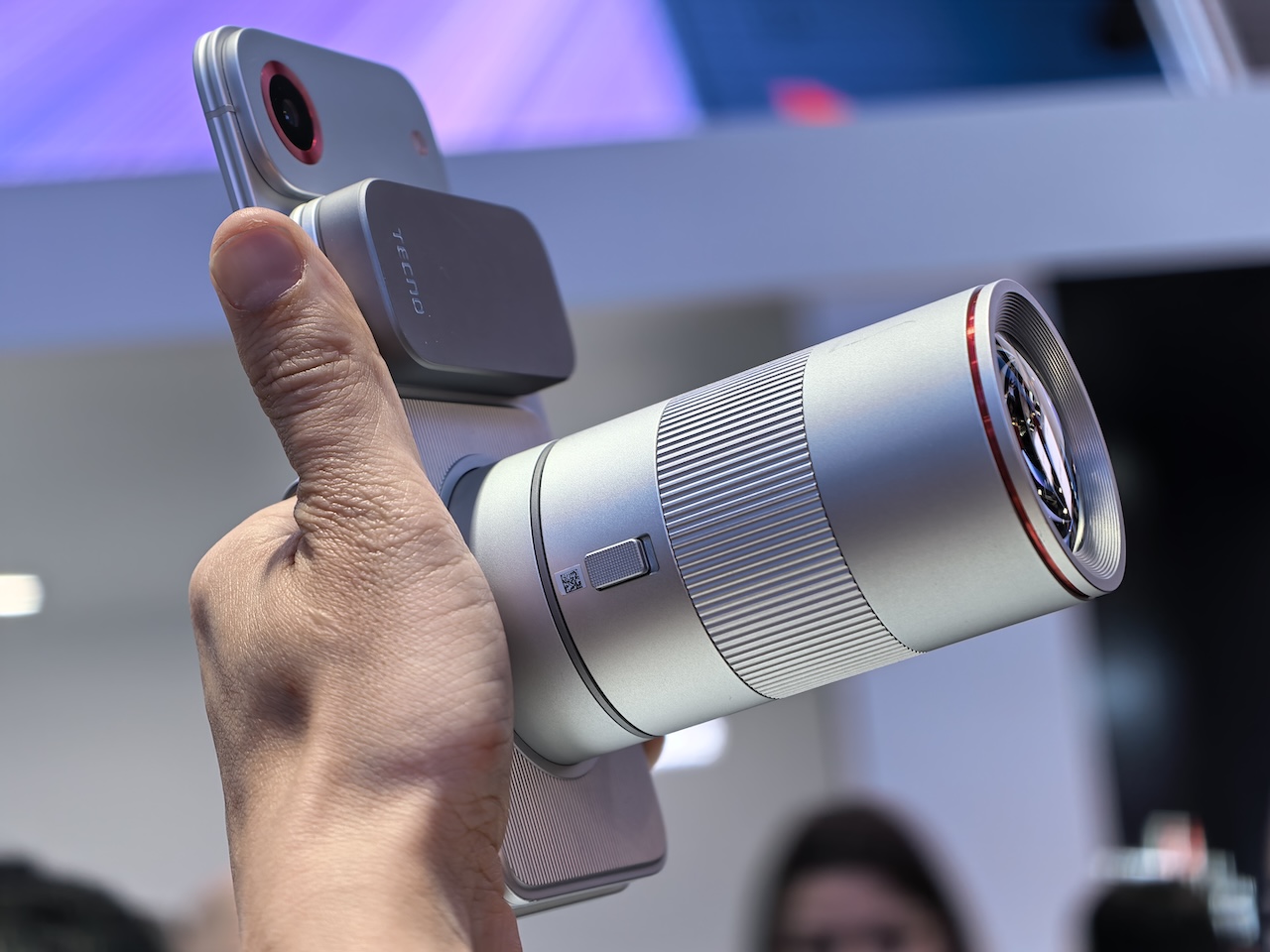
Fergus Halliday at WhistleOut, who was there with his hands on it, said the DSLR-style lens “feels like it pushes the attractive properties of the magnets involved to their breaking point.” Look at the photo and you can see what he means. The whole system is held together by magnets that were sized for a battery pack.
I love that they built it. I cannot pretend it is a phone accessory. That is a camera that happens to dock to a phone, and the moment you own it you are back to owning a camera, with all the deciding and carrying that comes with one.
The part I have to be honest about
I would love a week with it. I do not think I would carry it.
A module you left at home is not a feature. It is a phone that is slightly worse than the one you already had.
The whole reason the phone won is that it is the thing already in your pocket. It has no planning cost. You do not decide, at 8am, whether today is a photo day. Tecno’s ecosystem quietly asks you to make that call every morning, and the moments actually worth filming are the ones nobody schedules. If I had known, I would have brought the real camera anyway.
So the honest version of this phone in daily life is a small pouch of parts I have to remember, sitting in a bag I did not want to bring, for a situation that might not come up. That is a camera bag with extra steps and a higher price. Leo Li, Tecno’s product head for the modular technology, said the goal was “not to create a static masterpiece, but to offer an extension of human freedom.” The freedom on offer is the freedom to have packed correctly. And Tecno has been clear this is a concept, not a product with a date on it.
Go and look at it if you ever get the chance, and when you do, ignore the modules. Hold the 4.99mm base on its own, because that is the part that has a future. Everything clipped to the back is a beautiful answer to a question that got settled in 2016, when we all decided we would rather carry one thing that is pretty good than five things that are excellent.
If you want the full spec rundown, Tecno’s announcement is here. The hands-on from Digital Camera World is the better read if you care about the camera modules.