Apple has no answer to what Google just shipped
The short version
I spent a year not buying Meta Ray-Bans because Meta AI was the dealbreaker. Samsung and Google just shipped the alternative, and Apple does not have one.
I have spent the last year not buying Meta Ray-Bans. Every few months a friend turns up wearing them and I sit there doing the math. Hands-free photos, hands-free voice notes, a camera that does not require pulling a slab of glass out of my pocket. It is a genuinely good product. The reason it has stayed off my face is the four-letter problem stamped behind the temple. Meta AI. Trust your face camera, your audio feed, and your location stream to the company whose AI principles are written in disappearing ink. No thank you.
Yesterday Samsung and Google shipped the alternative. Android XR glasses, audio-only first, frames by Gentle Monster and Warby Parker, running Gemini, working with both Android and iPhone. The “and iPhone” bit is the part Apple has to sleep on. There is no Apple eyewear product on the market and no public release window for one. The category just got a credible second player, and Cupertino does not yet have a first player to defend.
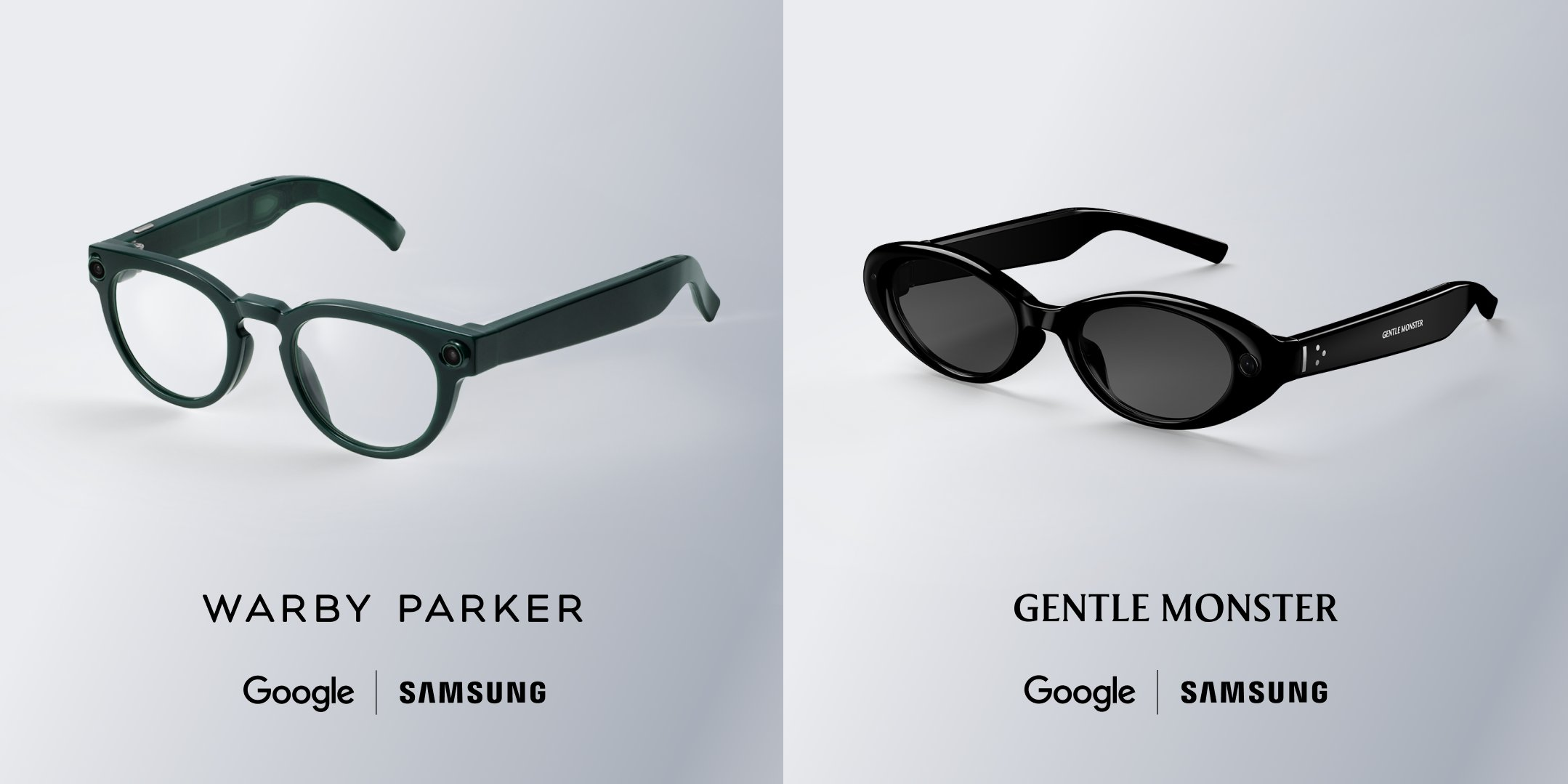
For the first time in this category there is more than one choice, and Apple is not one of them.
The audio-only version is the one you can actually buy
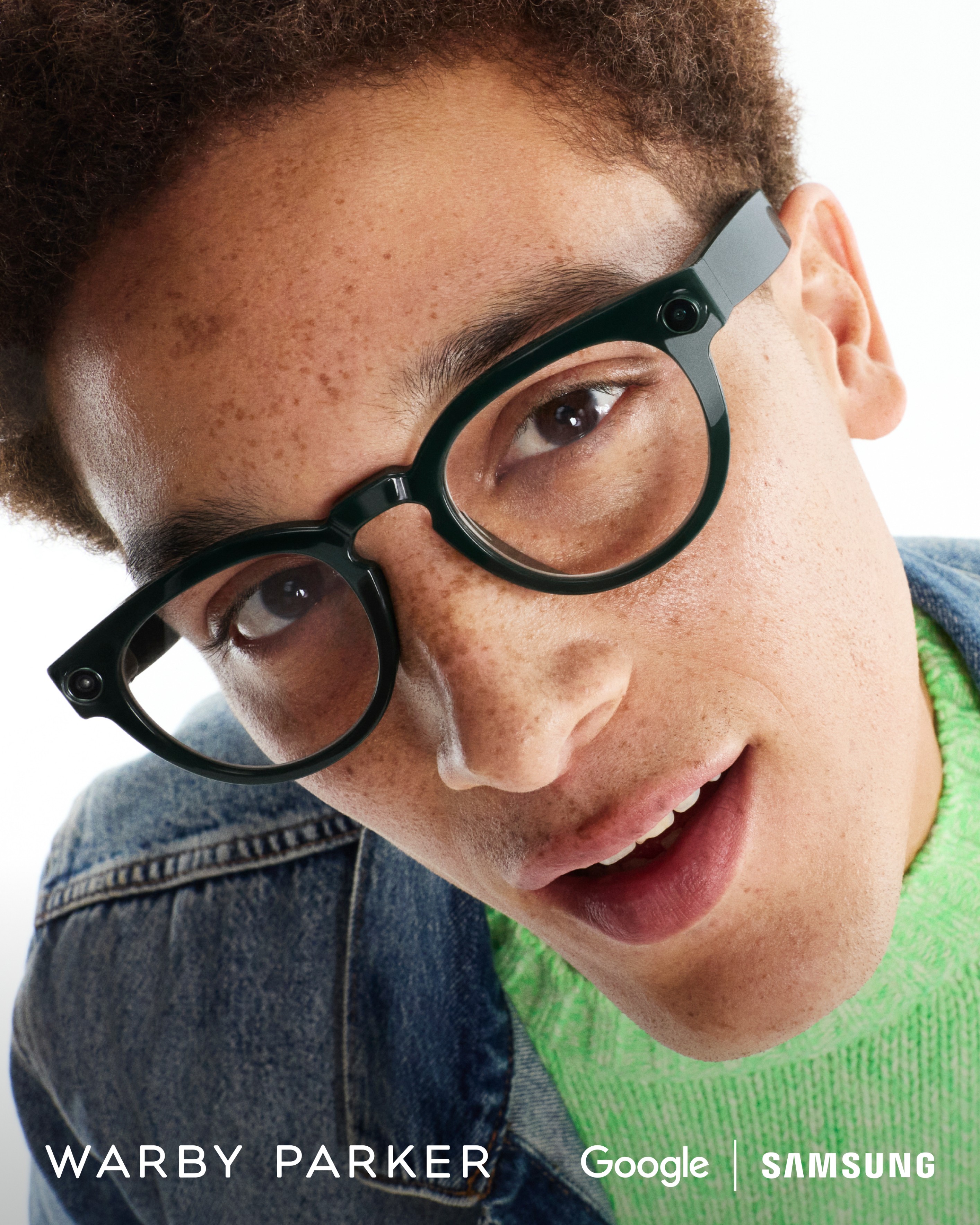
Samsung is launching two flavours. The audio-only frames ship in the US this autumn through Gentle Monster (slim, slightly disruptive silhouettes) and Warby Parker (the more traditional pair, the one your firm’s dress code would survive). Speakers, microphones, cameras. The AI compute lives on the phone you pair with, which is how the glasses stay light enough to wear all day.
The Gemini side is the part that matters. Live audio translation in your ear. Read text off a menu or a road sign and have it translated without lifting your phone. Turn-by-turn navigation whispered through the temple. Notification summaries. The demos worked on the I/O stage, which is also true of every product Samsung has ever demoed on a stage. Take that with the usual grain of salt.
iOS compatibility is the move I did not see coming. Meta Ray-Bans technically work with iPhones too, but Meta as a company is positioned against Apple. Samsung and Google are positioned against Meta, which means iPhone users are an addressable market rather than a hostage population. A Pixel-and-glasses pairing will work better than an iPhone-and-glasses pairing, the same way an iPhone-and-Watch pair works better than anything else. But the floor is “it works on an iPhone,” and the floor is the thing that decides whether your brother-in-law buys a pair.
Apple’s strategic position here is uncomfortable. Their wearable strategy has been Watch and AirPods since 2014. Reports of Apple’s own smart glasses keep slipping, with the last credible window being 2027. Samsung will have shipped two product generations by then. The Watch was the playbook for owning a category by being first. Apple is not first this time.
The display version is the one you actually want
The second flavour was demoed at I/O but does not ship until late 2026 at the earliest, possibly 2027. It adds a small in-lens display. You stop hearing your notifications and start seeing them. Turn-by-turn nav becomes an actual arrow in your visual field. Captions appear over the person speaking to you in a language you do not read.
Here is the real question. If you are in the market right now, do you buy the audio-only pair this autumn, or do you wait twelve to eighteen months for the display version?
I am leaning towards waiting. The audio-only frames are a refinement of the Meta Ray-Ban category, which is already two product generations old. The display version is the actual leap. Buying the audio-only pair in late 2026 is paying first-generation prices for last-generation capability while the next generation is publicly on a roadmap. It is the iPhone-three-months-before-a-keynote move.
The counter-argument is wearability. First-generation displays in eyewear tend to be small, dim, and battery-hungry. The audio version is more boring, and boring is sometimes the right buy. If your use case is voice notes, translation, and turn-by-turn nav while walking through a foreign city, the audio version is the whole product. If your use case is captions over a conversation in Japanese, you should wait.

What Samsung did not put on a slide
Here is what was missing from the keynote. No confirmed price. Supply-chain leaks put the audio-only frames in a US$379 to US$499 band, which in Singapore dollars is probably north of S$650 after the usual markup. Nothing said publicly. No Samsung confirmation. No specific release date inside the autumn window, which historically means November rather than September. No battery life numbers, which for a wearable computer with cameras and microphones is the spec.
A keynote that demos a product without telling you what it costs, when you can buy it, or how long it lasts on a charge is a teaser, not a launch. I am still excited. I am not pre-ordering anything.
If you have been waiting for a non-Meta version of this category, the wait is mostly over. Decide now whether you are buying the version that ships first or holding out for the version that ships right. Then ignore everyone arguing about either until Samsung publishes a price.
If you want Google’s full pitch for the eyewear, it is here. Fair warning, the first half reads more like a fashion campaign than a product launch.